
Climate change is disrupting pollination cycles and putting crops at risk.
I wrote this piece in February 2024, in the midst of Britain’s fifth-mildest winter since 1884.
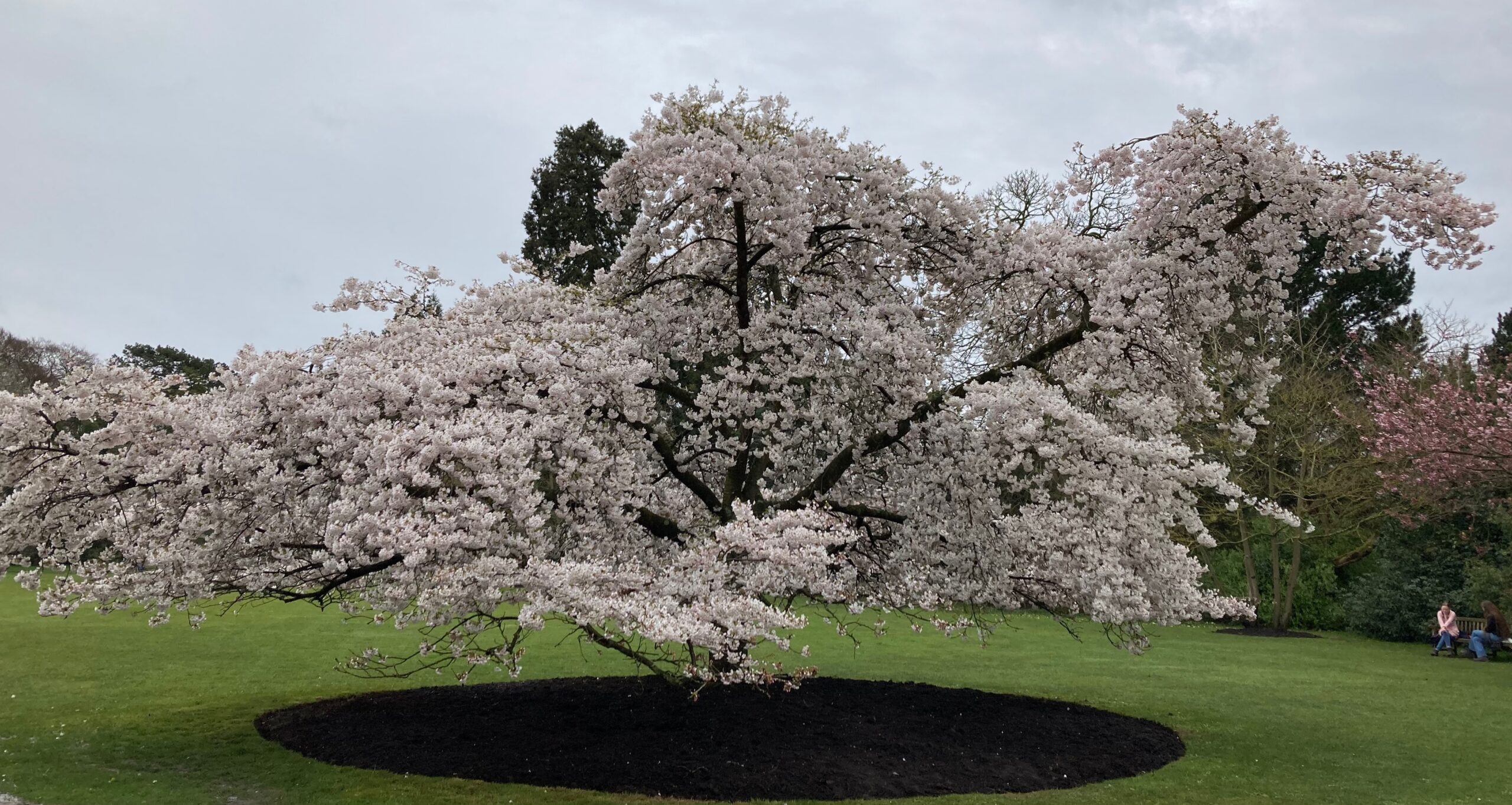
Spring usually feels like a distant fever dream in a bleak London February. Not so this year. Mild temperatures have graced the city, bringing with them signs of an early spring. Walk through Regent’s Park and you will spot cherry blossoms in full flower and hundreds of cheery daffodils sprouting through the muddy grass. Has spring already sprung?
London’s bloomers are part of a global trend of early flowering, driven by climate change. Historical records reveal just how much plants’ lifecycles have shifted in recent decades. Professor Ulf Büntgen and his team at the University of Cambridge studied botanical archives in the UK since 1753. They found that the first spring blooms have typically occurred more than a month earlier in the years since 1986 than in the decades before. Another study, published in Environmental Research Letters, used climate attribution models to showed that the 11 day shift in Japan’s cherry blossom season seen since the 1930s would not have happened without climate change.
The welcome spray of spring colours hides gloomier realities. A mismatch between flowers’ blooming periods and the lifecycles of their codependent pollinators, known as bloom asynchrony, occurs when plants and insects respond to temperature changes at different rates. Bloom asynchronies already exist, and scientists expect them to grow as temperatures continue to rise. This will have devastating effects on both plants and their pollinators. Plants rely on bees, butterflies, birds or other nectar-loving creatures to visit their flowers and transfer pollen to produce fruit. Pollinators need nectar for food and reproduction.
For fruitgrowers and flower farmers, bloom asynchrony could have serious impacts on crop yields. More than a third of global crops are at least partially dependent on pollination, accounting for almost 10% of total food production. Farmers have so far relied on insects and birds to pollinate their crops. As temperature changes continue to disrupt biological cycles, these interactions are no longer a given. This puts the horticultural industry, and the billions of people who eat its produce, in jeopardy.
Horticulturalists have begun searching for other ways to pollinate crops. It is common practice to hire the pollination services of commercially-managed bees in places with where wild bee populations are low, especially for high-value crops like almonds. But as pollinators’ lifecycles diverge from those of fruit and flowers, these rent-a-bee solutions will not be able to keep up with demand for pollination. Farmers are looking to technology to fill the gap.
One area being explored is the application of gene editing technology to the genetic determinants of plant-pollinator relationships. CRISPR, a tool for tweaking genomes to propagate desired traits, can increase the yields, resilience, and quality of fruit and flowers. This is just the latest iteration of genetic manipulation in horticulture, where selective breeding of plants to improve crops has been used for thousands of years. Recent experiments are testing how CRISPR could reduce bloom asynchronies. A study published in Current Biology showed that editing a single gene in a petunia flower could increase its appeal to a different pollinator species. This could have broader implications if plants can be encouraged to switch to pollinators with alonger feeding season.
Artificial intelligence can improve crop management. Imaging technology and nanosensors can help farmers understand trends in plant and soil condition and optimise their use of fertilisers. Predictive algorithms can identify the early signs of disease. While these AI applications do not change plants’ interactions with pollinators, improving crop health will increase yields and reduce the disruption to food production.
These innovations may ease the impact of bloom asynchrony in some managed crops in some wealthy countries, but they not address the root of the problem. Most plants will not have their genes edited or be dotted with nanosensors. The best way to manage the disruption to pollination cycles and crop production is to slow the temperature changes that cause bloom asynchrony. We are not out of the woods yet.
Leave a Reply